
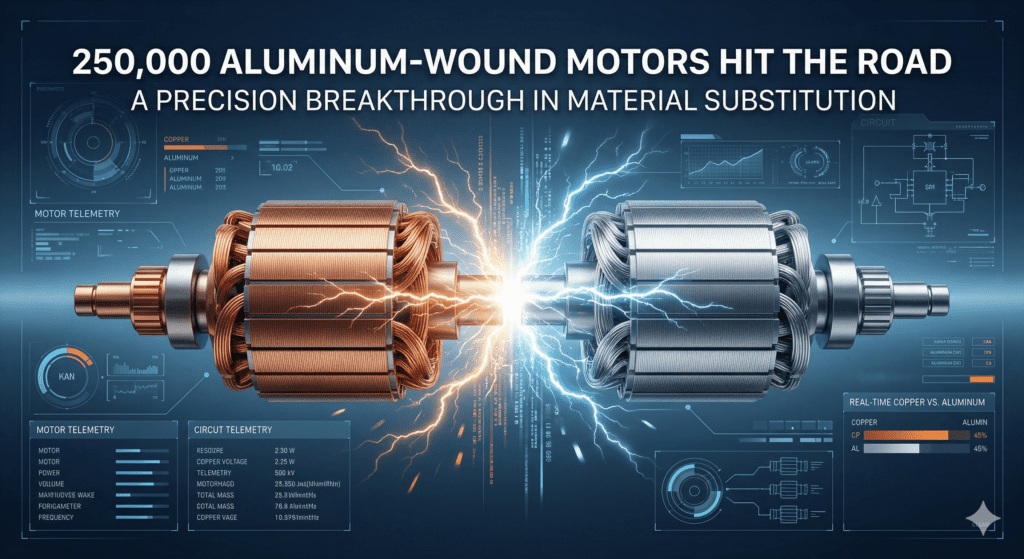
With copper prices consistently hovering above 100,000 RMB/ton ($14,000/ton) in early 2026, the EV industry is accelerating its transition to aluminum-based windings. The news of 250,000 aluminum wire motors entering mass production marks a pivotal shift from “experimental” to “commercial reality.”
For motor manufacturers, the choice now lies between Pure Aluminum Wire and high-performance Copper-Clad Aluminum (CCA) Enameled Wire.
The Evolution of Aluminum Winding Technology
Historical concerns about aluminum—such as oxidation at connection points and thermal expansion stress—are being solved by modern innovations. Ultrasonic welding and Bimetallic Cladding Technology now ensure that aluminum-based motors meet the rigorous durability standards of the automotive industry.
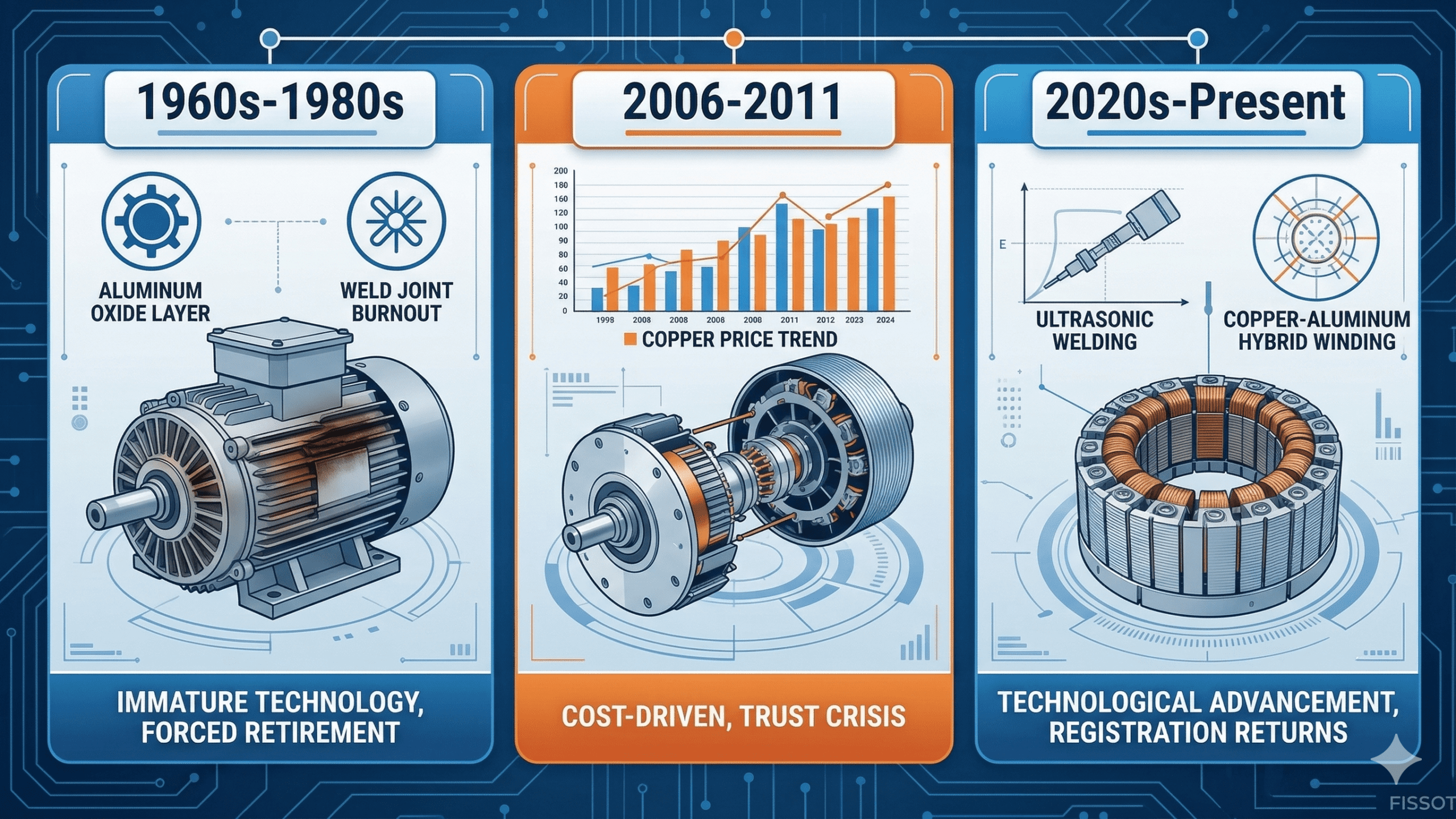
Pure Aluminum vs. Copper-Clad Aluminum (CCA) Enameled Wire
As a leading manufacturer of bimetallic conductors, FISSOT® provides high-quality wire solutions tailored to different engineering needs.
1. Pure Aluminum Enameled Wire: Maximum Cost Reduction
- Pros: Reduces material costs by over 50% compared to pure copper. Offers superior weight reduction.
- Cons: Only 61% conductivity of copper. Requires specialized laser or ultrasonic welding due to the rapid formation of surface oxides.
- Best For: Cost-sensitive micro-motors, household appliances, and low-load auxiliary drives.
2. Copper-Clad Aluminum (CCA) Enameled Wire: The Seamless Upgrade
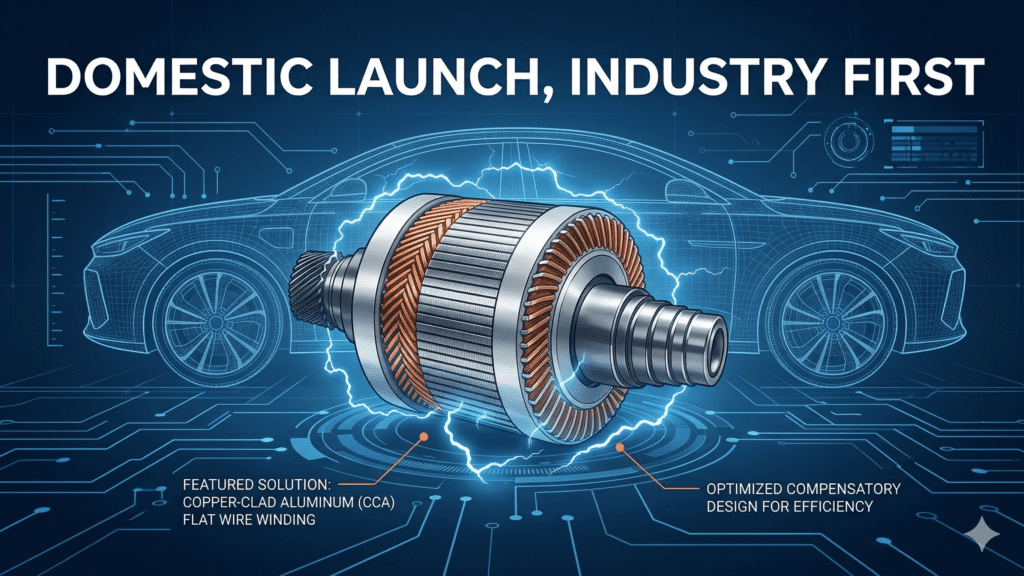
FISSOT’s CCA Wire features a patented metallurgical bond between a lightweight aluminum core and a high-purity copper outer shell.
- Solderability: CCA Wire offers the same ease of soldering as pure copper, allowing manufacturers to switch materials without overhauling existing production lines.
- Skin Effect Efficiency: At high frequencies, electricity flows primarily through the copper outer layer, making CCA Wire significantly more efficient than pure aluminum.
- Corrosion Shield: The copper layer protects the aluminum core from environmental degradation, ensuring a longer service life.
Engineering Challenges: A Systemic Approach
Adopting aluminum is not a simple “plug-and-play” process. It requires:
- Volume Adjustment: Larger wire diameters are needed to match copper’s current capacity, requiring optimized stator slot designs.
- Thermal Management: Since aluminum has lower thermal conductivity, advanced cooling systems (like “near-slot cooling”) are essential to maintain efficiency.
Conclusion: The Future of Bimetallic Motors
In 2026, the “Copper vs. Aluminum” debate has evolved into a strategic partnership. While pure aluminum targets extreme cost-cutting, CCA Enameled Wire offers the perfect balance of electrical performance, reliability, and manufacturing compatibility.
🛠️ FISSOT® Engineering Support
Ready to calculate your material savings by switching to CCA Wire?