
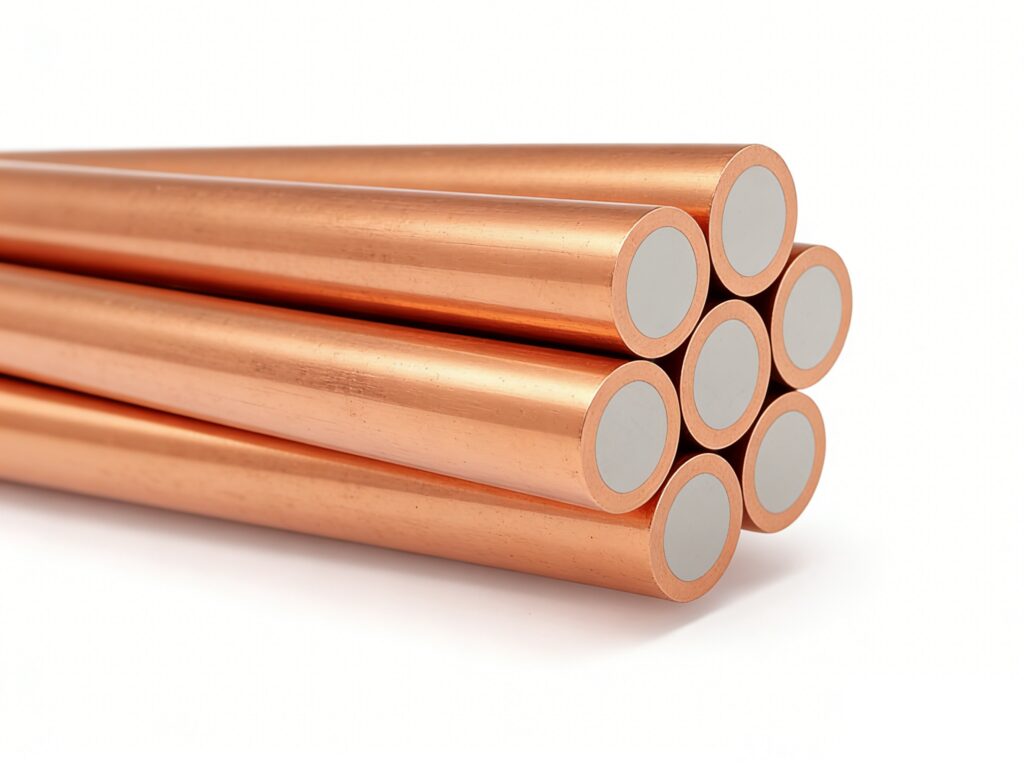
Copper-Clad Steel (CCS) wire is a high-performance bimetallic conductor that engineers a seamless bond between a high-strength steel core and a conductive copper outer layer. This unique structure provides the high-frequency conductivity of copper with the superior mechanical durability of steel.
In large-scale power transmission and grounding projects, the choice between 7-strand and 19-strand constructions is critical. Each configuration offers distinct advantages in terms of tensile strength, flexibility, and environmental resilience.
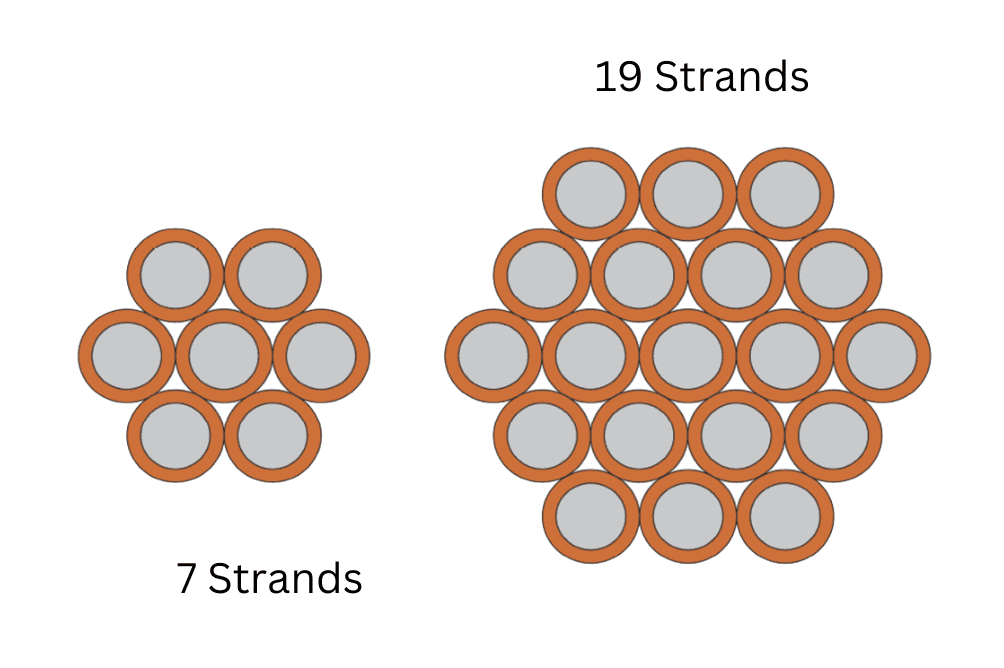
7-Strand Copper-Clad Steel (CCS) Wire: Flexibility & Efficiency
The 7-strand configuration is formed by twisting seven individual CCS wires. It is widely regarded as the industry standard for general-purpose electrical applications.
Key Characteristics:
- Balanced Mechanical Strength: Offers high tensile strength while remaining manageable during installation.
- Ease of Installation: With a smaller relative diameter and lower weight than 19-strand alternatives, it simplifies handling in complex terrains.
- Cost-Effectiveness: Ideal for projects where extreme tension is not the primary concern.
Primary Applications:
- Medium-to-Short Span Overhead Lines: Excellent resistance to wind vibration.
- Distribution Networks: Reliable performance for urban and rural power grids.
- Grounding Systems: Used extensively for transformer leads and substation grounding grids.
19-Strand Copper-Clad Steel (CCS) Wire: Heavy-Duty Performance
Comprising nineteen finer individual wires, the 19-strand CCS wire is engineered for high-performance scenarios where mechanical failure is not an option.
Enhanced Properties:
- Superior Tensile Strength: The multi-strand design provides a denser core, allowing the cable to withstand significantly higher loads.
- Extreme Fatigue Resistance: The increased number of strands allows the wire to better absorb mechanical stress and vibration over long distances.
- Higher Surface Area: Enhances skin-effect efficiency for high-frequency grounding and improves corrosion resistance in harsh environments.
Primary Applications:
- Long-Span Transmission Lines: Designed for high-tension crossings over rivers or valleys.
- Harsh Environments: Ideal for high-corrosion coastal regions or areas prone to heavy ice loading.
- High-Speed Railway Catenary Systems: Where constant tension and durability are paramount.
Technical Comparison Table
| Feature | 7-Strand CCS Wire | 19-Strand CCS Wire |
| Flexibility | High (Easier to bend) | Moderate (Denser structure) |
| Tensile Strength | Standard | Very High |
| Fatigue Resistance | Moderate | Superior |
| Best For | Distribution & Grounding | Main Transmission & Extreme Loads |
| Installation Cost | Lower (Lighter/Easier) | Higher (Heavier/Complex) |
Selection Guide: How to Choose?
When selecting the right CCS strand for your power system, evaluate the following three project parameters:
- Mechanical Requirements: For high-tension spans or regions with severe weather (heavy wind/ice), prioritize the 19-strand wire for its superior breaking strength.
- Environmental Factors: In coastal or industrial areas with high salinity, the 19-strand wire typically offers a longer service life due to its robust design.
- Installation & Budget: For routine grounding or short-distance distribution, 7-strand wire is the more economical and flexible choice.
Conclusion
Both 7-strand and 19-strand Copper-Clad Steel wires are foundational to modern electrical infrastructure. While the 7-strand version offers practicality and cost-efficiency, the 19-strand version provides the ultimate strength needed for demanding environments.