
As automobiles become increasingly electrified and intelligent, wiring harnesses, serving as the “nervous system” of vehicles, face ever more stringent performance requirements. While the copper-to-aluminum trend offers advantages in lightweighting and cost reduction, copper-clad steel wire is emerging as a dark horse in the automotive wiring harness field due to its distinct technical characteristics.
01 Industry Challenges: The Dilemma of Traditional Wiring Harness Materials and the Limitations of Aluminum Substitution
The current automotive wiring harness field faces multiple challenges, particularly the contradiction between performance and cost of traditional materials. While traditional pure copper wire offers excellent conductivity, it suffers from high cost and significant weight. Aluminum substitution, although reducing cost and weight, presents challenges such as relatively lower conductivity and connection reliability.
More critically, in specialized cable applications, traditional materials often struggle to balance multiple performance requirements. For example, signal transmission lines require excellent conductivity and anti-interference capability, grounding wires need good mechanical properties and corrosion resistance, and drive cables demand higher strength and durability.
Copper-clad steel wire products on the market also face quality issues. Core problems include: excessively high strength and poor consistency of the wire rod used for copper-clad steel, resulting in poor drawability and high processing stress; inconsistent steel quality leading to significant variations in weldability control; low steel purity and large inclusion sizes causing frequent wire breaks during drawing and stranding processes.
These problems directly impact production efficiency and product quality, failing to meet the preparation requirements for high-end automotive cables. How to control costs while ensuring harness performance meets the increasingly stringent automotive application environment has become an urgent challenge for the entire industry.
02 Technological Breakthrough: Innovation and Advantages of Special Copper-Clad Steel Materials
Facing the limitations of traditional materials, special copper-clad steel materials demonstrate unique composite advantages through technological R&D. In 2018, through collaboration with Shougang Group, an ultra-low carbon high-boron steel wire rod for copper-clad steel wire was successfully developed, achieving a technological breakthrough across the upstream and downstream industrial chain.
The material boasts excellent mechanical properties, weak magnetic permeability, good flexibility, high steel purity, and consistency in properties throughout the length, along with good torsion/bend performance and a low yield ratio. These meet the requirements for processing high-end copper-clad steel wire products.
This technological breakthrough gained international recognition. In February 2025, the ISO 14811:2024 international standard for “Ultra-low carbon high-boron steel wire rod for copper-clad steel wire” was published and implemented by ISO, providing international standard support for this dedicated wire rod product.
National and industry standards have also been successively established, providing a standardized foundation for the production and application of this material, creating conditions for its widespread use in the automotive wiring harness field.
03 Performance Advantages: A Comprehensive Solution for Automotive Wiring Harnesses
Special copper-clad steel materials offer comprehensive performance advantages for automotive wiring harnesses. In terms of conductivity, it can meet the requirements of the vast majority of automotive wiring harness applications while significantly reducing material costs compared to pure copper.
Its unique composite structure gives the material excellent mechanical properties, retaining the high-strength characteristics of steel while possessing the good conductivity and corrosion resistance of copper. This enables copper-clad steel wire to withstand vibration and mechanical stress during vehicle operation, improving harness durability and reliability.
Regarding flexibility and processability, the material’s low yield ratio and good torsion/bend performance make the harness more flexible and convenient during installation and routing, reducing the risk of damage caused by bending.
Copper-clad steel wire also features weak magnetic permeability, which is particularly important for signal transmission lines, helping to reduce electromagnetic interference and improve signal transmission quality.
Compared with traditional pure copper and aluminum wires, copper-clad steel wire achieves a better balance between cost, weight, and performance, providing automakers with more diversified options.

04 Application Scenarios: Meeting Diverse Automotive Wiring Harness Needs
Special copper-clad steel wire can meet diverse automotive wiring harness application requirements. In the field of dedicated signal cables, its excellent conductivity and weak magnetic permeability ensure stable and reliable signal transmission.
As automotive grounding wires, copper-clad steel wire offers both good conductivity and sufficient mechanical strength and corrosion resistance for long-term stable operation.
For automotive drive cables, the material’s high strength and durability enable it to withstand the high-temperature and high-vibration environment of the engine compartment, ensuring reliable power transmission.
In the preparation of high-performance new energy vehicle wiring harnesses, copper-clad steel wire provides a balanced solution for lightweighting and high performance, offering unique advantages especially in high-voltage harness applications.
In precision application scenarios such as signal transmission lines, its high material purity and consistency ensure stable harness performance. Copper-clad steel wire demonstrates good adaptability to automotive industry requirements for high temperature resistance, good vibration resistance, flame retardancy, flexibility, corrosion resistance, and environmental standards.
05 Customer Value: Transforming Technical Advantages into Tangible Benefits
For automakers and wiring harness suppliers, the value brought by special copper-clad steel wire extends far beyond the performance improvement of the material itself. From a cost perspective, compared to pure copper wire, copper-clad steel wire can significantly reduce material costs while maintaining good performance.
In terms of production efficiency, superior material characteristics and stable processing performance reduce wire breakage rates and defect rates during production, improving overall production efficiency. Taking practical application as an example, using this high-quality copper-clad steel wire can increase enterprise production efficiency by over 15%.
From the perspective of product reliability, the high strength and durability of copper-clad steel wire translate into longer service life and lower failure rates, reducing after-sales maintenance costs and enhancing the overall quality image of the automotive brand.
Regarding design flexibility, the good flexibility and diverse specifications of copper-clad steel wire allow for more flexible automotive wiring harness layouts, helping to optimize overall vehicle design and space utilization.
For increasingly stringent environmental requirements, copper-clad steel wire offers better environmental characteristics compared to traditional materials, aligning with the green development trend of the automotive industry and helping enterprises meet environmental regulations.
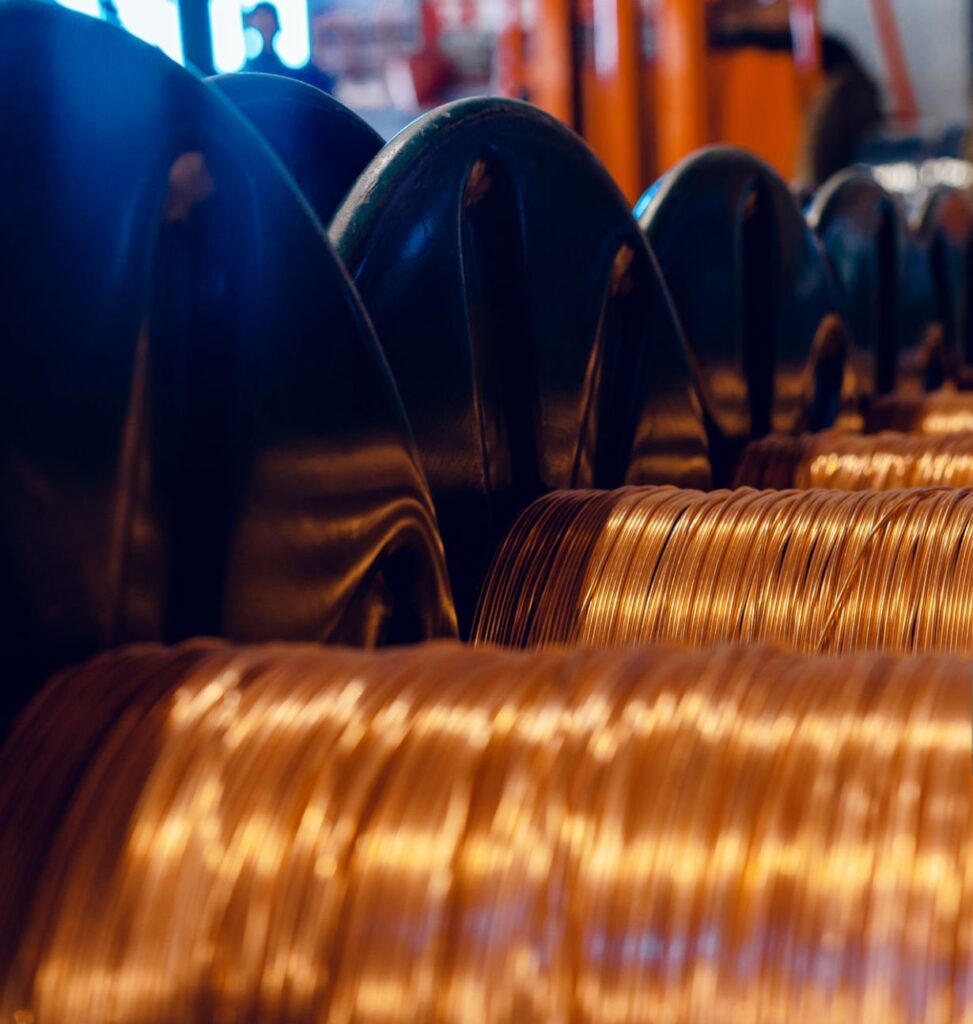
A roll of special copper-clad steel wiring harness is about to be installed in a vehicle. It connects not only the various electronic systems of the car but also technological innovation with market demand.
 English
 简体中文
简体中文 Español
 Русский
 日本語
日本語 Türkçe