
Introduction
Copper Clad Steel (CCS) wire is a composite conductor material that combines a high-strength steel core with an outer layer of high-conductivity copper. This innovative design merges the mechanical robustness and cost-effectiveness of steel with the excellent electrical conductivity and corrosion resistance of copper. Since its development, CCS wire has become a fundamental component in electrical grounding and lightning protection systems across industries including telecommunications, power transmission, construction, and renewable energy.
The primary function of CCS in grounding applications is to provide a safe, low-resistance pathway for fault currents, lightning strikes, and static charges to dissipate harmlessly into the earth. This critical function protects infrastructure, ensures personnel safety, and maintains the operational stability of electrical systems.
Core Applications of CCS in Grounding Systems
1. Electrical System Grounding (Grounding Conductors)
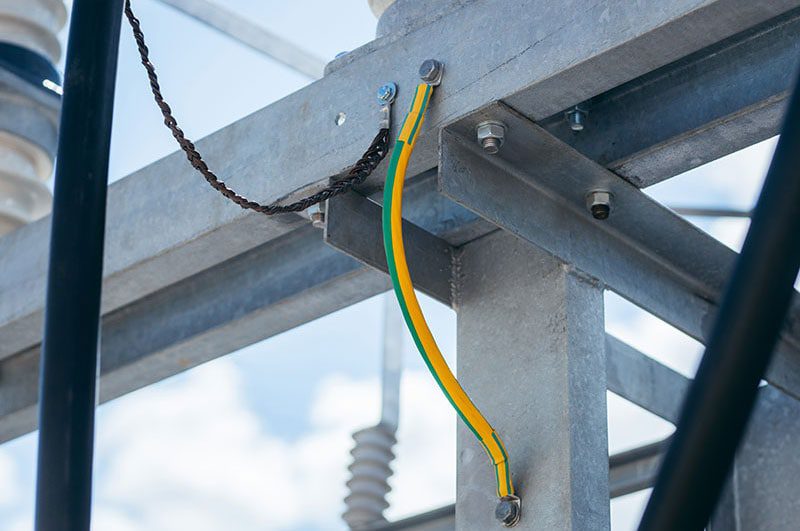
CCS wire serves as the primary grounding electrode conductor in electrical installations for commercial buildings, industrial facilities, and utility substations. It establishes the crucial connection between electrical system neutrals, equipment enclosures, and grounding electrodes. The copper cladding provides optimal electrical conductivity for efficient fault current dissipation, while the steel core delivers exceptional tensile strength capable of withstanding mechanical stress and long spans between supports.
2. Grounding Electrodes & Grounding Grids
In grounding electrode systems, CCS is utilized in multiple configurations:
- Ground Rings: CCS wire encircles structures at foundation level
- Grounding Grids: CCS conductors are buried in a grid pattern beneath critical facilities like electrical substations and data centers
- Grounding Rods: Solid CCS rods are driven vertically into the earth
The steel core’s rigidity allows for straightforward installation even in challenging soil conditions, while the copper surface ensures long-term conductivity and corrosion resistance, offering significant advantages over traditional galvanized steel electrodes.
3. Lightning Protection Systems (LPS)
Within Lightning Protection Systems (LPS), CCS wire functions as down conductors that create a controlled, low-impedance path for lightning current. These conductors are strategically installed on building exteriors to safely channel the tremendous energy of a lightning strike from air terminals (lightning rods) to the grounding electrode system. CCS wire’s composite structure provides the necessary thermal resilience and mechanical strength to withstand the extreme conditions of a lightning discharge without catastrophic failure.
4. Specialized Applications
- Telecommunications & RF Shielding: CCS wire provides effective site grounding for cellular towers and forms ground planes for RF shielding applications
- Cathodic Protection Systems: Serves as grounding conductors for impressed current cathodic protection systems that safeguard pipelines and storage tanks
- Renewable Energy Infrastructure: Forms extensive grounding grids for solar farms and provides grounding solutions for wind turbine foundations
Selection Guidelines for CCS Wire
Selecting the appropriate CCS wire requires careful consideration of several technical factors:
Select appropriate diameter and configuration for the specific application
Electrical Requirements:
Determine the required conductivity (typically 30%, 40%, or 50% of pure copper)
Calculate the necessary cross-sectional area based on fault current levels
Mechanical Requirements:
Assess tensile strength needs based on installation method and span lengths
Consider flexibility requirements for installation around obstacles
Environmental Factors:
Evaluate soil conditions (pH, moisture content, contamination)
Consider atmospheric conditions in above-ground applications
Standards Compliance:
Ensure products meet relevant standards (UL 467, IEEE 837, ASTM B910)
Verify independent certification from recognized testing laboratories
Installation Considerations:
Choose between solid or stranded construction based on installation method
Conclusion
Copper Clad Steel wire represents a technologically advanced solution that continues to demonstrate exceptional value in grounding applications. Its unique composite design delivers an optimal balance of electrical performance, mechanical strength, and economic efficiency that neither pure copper nor galvanized steel can independently provide.
As infrastructure demands evolve with smart grid technologies, renewable energy expansion, and increasingly sophisticated data center requirements, CCS wire maintains its relevance through continuous innovation. For engineers, designers, and installation professionals, CCS offers a reliable, code-compliant, and cost-effective grounding solution that addresses both traditional requirements and emerging challenges in electrical system protection.
 English
  Chinese
  Spanish
  Russian
  Japanese
  Turkish